
our projects
Nudgeathon Research Project
Nudgeathon Background
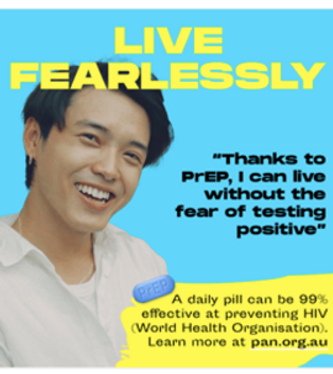
This projects aims to improve PrEP awareness and access among overseas-born gay, bisexual men, and men who have sex with men (Ob-GBMSM) through the use the co-designed digital ads from the Nudgeathon event to create a national Nudgeathon Social Media Campaign in Australia.
Ob-GMSM is one of the vulnerable communities with increased HIV risk in Australia, as they continue to experience structural, cultural and language barriers in accessing sexual health services and tools, such as pre-exposure prophylaxis (PrEP) medication. PrEP is shown to be highly effective in preventing HIV during sex. Thus an increase in uptake of PrEP among highly at-risk Ob-GBMSM individuals has the potential to decrease the rates of HIV transmission and infection among the populations.
The Nudgeathon Project incorporates the theory of behavioural economics, that is a relatively new field that combines human psychological insights with economic decision-making processes to influence the individual in making decisions. It can be a powerful approach to improve the health and wellbeing of communities by applying behavioural insights to create interventions with ‘nudges’ to encourage making decisions that leads to healthy behaviours.
Nudgeathon Phases
Phase 1: Nudgeathon online event to co-create an advertisement image
Phase 2: Evaluation of the Nudgeathon event through interviews and surveys
Phase 3: National Nudgeathon Social Media Campaign
The Aim of Nudgeathon
National Nudgeathon Social Media Campaign will select the most voted co-designed advertisement image in the survey that was created during the Nudgeathon event (Phase 1), as a reference. The selected image is re-produced professionally for the Campaign with the addition or removal of some elements, based on the findings in the surveys in the evaluation (Phase 2). The final image, that is pinned by the theory of behavioural economics, is used in the Social Media Campaign (Phase 3) targeting Ob-GMSM populations on mobile gay dating apps and online social media. When an individual clicks on the advertisement, the link will lead them to the PAN website (www.pan.org.au) on which they can access a list of links of pharmacy websites to buy PrEP medication online for HIV prevention. The aim of the Nudgeathon project is to improve PrEP use among overseas-born gay, bisexual and other men who have sex with men (Ob-GBMSM) communities in Australia using the behavioural economics approach.

SRH Education Research Project
Study Background
Previous studies often focused on international students’ perspectives on sexual and reproductive health (SRH). However, to date, there are no Australian or international studies to specifically investigate tertiary education providers’ perspectives on the topic.Therefore, this study was intended to explore tertiary education providers’ views on SRH education specific to international students in Victoria, Australia. International students are facing various socio-cultural and systemic barriers to access SRH information and education in Australia.
These barriers include, and not limited to:
Socio-cultural taboo and stigma around sex, sexuality, and SRH;
Limited SRH knowledge and education in country of origin and in Australia;
Limited SRH resources specific to international students in Australia;
Language barriers and low SRH literacy;
Perceived and real cost to access SRH, including contraception and HIV prevention strategies such as PrEP (Pre-Exposure Prophylaxis);
Confusion around navigating the Australian healthcare system; and
Limited government funding to develop SRH education specific to international students.
The Aim of Research
The objective of the study was to explore tertiary education providers’ views on SRH education specific to international students, and whether they see a role in providing students with such education. The study was designed to explore staff’s perspectives on the topic, compare and contrast their views and opinions with international students’ views, and identify future opportunities for tertiary education providers to deliver SRH education to international students.
Research Methodology
1-on-1 qualitative interviews with 15 staff working at tertiary education providers (university, TAFE, and English language school)
Two focus groups with international students currently studying in Victoria, with a total number of 9 student participants
Purposive sampling method and reflexive thematic analysis
Research Findings
Both staff and student participants said that tertiary education providers should provide SRH education to international students.
Systemic and socio-cultural barriers identified by staff participants include limited funding from both State and Federal governments to develop SRH education for international students, staff own discomfort and lack of knowledge to talk about SRH to international students, confusion about who is responsible to deliver SRH education to the students, and lack of resources on SRH specific to international students.
Opportunities identified by staff and student participants include sustainable funding from both the State and Federal governments to support SRH education for international students, centralised and government funded knowledge hub (website and social media) on SRH that can be disseminated through tertiary education providers’ websites and student portals, SRH information and activities at international students’ pre-departure and orientation programs, health and wellbeing outreach team that embed SRH as part of the program to reach metropolitan and regional areas with involvement from SRH nurses and peer educators, SRH training for staff and students on issues specific to international students.
The identified benefits of providing SRH education to international students include increase SRH knowledge to make informed decisions, improve their overall health and wellbeing during their study in Australia, and influence their study outcomes and experiences in Australia.
Recommendations to take action on:
On-going and sustainable funding from the State and Federal governments to design and deliver SRH education specific to international students
A government-supported collaboration between community health organisations, international students bodies, tertiary education providers, and Overseas Student Health Cover (OSHC) providers to produce and disseminate SRH education programs including outreach, peer-to-peer education, activities at pre-departure and orientation programs, and SRH training modules for staff and students
Creation of a centralised knowledge hub (websites and social media) on SRH that are culturally appropriate and safe for international students
Policy change to ensure SRH is specifically included in the Education Services for Overseas Students (ESOS) legislation that must be followed by all tertiary education providers
Publications:
A manuscript is currently being finalised.
HIVST Research Project
The Aim of Research
HIV self-testing (HIVST) is an additional testing approach for key populations. We aimed to examine the knowledge, attitudes, and practices of HIVST among Asian-born gay, bisexual and other men who have sex with men (GBMSM).
Research Methodology
This qualitative study used semi-structured interviews of overseas-born GBMSM of Asian background in Australia. Participants were recruited from personal networks, social media platforms, snowballing, and the Melbourne Sexual Health Centre. Twenty-five participants were purposively sampled with a range of ages and previous levels of experience with HIVST.
Research Findings
The age of the participants ranged from 19 to 44 years, with a median of 30 years. Most were unaware of HIVST before the interview, and only a few had ever used one. All had limited sexual health knowledge before they arrived in Australia.
Upon learning about HIVST during the interview, many expressed willingness to use HIVST, but in limited circumstances, such as travelling overseas, interim testing while taking on-demand PrEP, and point-of-sex testing. Almost all were open to distributing HIVST to their casual partners or friends, especially those they knew who engaged in high-risk sexual practice and were not engaged in sexual healthcare. About half still preferred conventional serology testing because of regular HIV testing as part of PrEP prescription and the need for testing for other sexually transmitted infections.
HIVST may be an acceptable additional testing approach for HIV testing among Asian-born GBMSM. Peer education and secondary distribution may help raise HIVST use and awareness.
Publications:
A manuscript is currently being finalised.